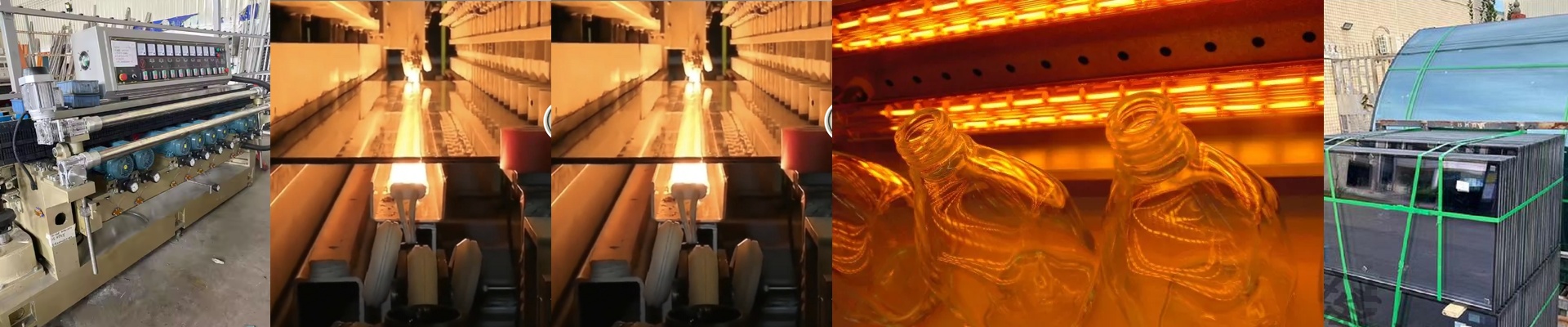
The oven door on a glass furnace is more than just a barrier. It’s the line in the sand between a stable thermal profile and a production headache. When the seal goes, heat walks right out the door. The thermal field drifts, the line starts chasing temperature, and the whole process gets ugly. Tempering, bending, lamination, and coating drying all run on repeatable heat. One weak point at the door, and you pay for it in scrap, reheat cycles, and wasted gas or electricity. We built an oven door seal specifically to stop that loss at the source. Forget a generic gasket. This is an integrated heating and sealing component, designed around the realities of high-temperature glass work: fast heat-up, a steady soak, and repeated thermal cycling without drift.
What matters under the hood
At the core, this seal is an industrial heating element matched to the furnace door geometry. It acts as both heat source and compression seal. Depending on the furnace design and temperature profile, you can spec the element as short-wave, medium-wave, or carbon-fiber infrared. The goal is predictable heat transfer right where you need it—along the seal zone.
- Temperature capability: Built for continuous operation up to 800°C, with short-term excursions to 900°C during peak cycles. The body uses refractory-grade fiber board with high-temperature mineral wool under compression. The heating element sits in a quartz or ceramic sheath chosen for thermal shock resistance.
- Heating response: Fast-response elements cut soak time. In practice, that means less time stabilizing after the door closes and less waiting for the thermal profile to get back to setpoint.
- Power and voltage: Common configurations run at 230 V, 460 V, or 400 V three-phase. Power density is matched to the door perimeter length. We size wattage to offset door heat loss, not just to warm the surface. Typical layouts run 0.8–1.5 kW per linear meter of seal, adjusted for door thickness, insulation, and furnace duty cycle.
- Seal geometry and mounting: The seal is a continuous loop with corner miters, compressed by stainless steel fasteners and high-temperature anchors. It drops into the door frame channel, replacing worn OEM seals without reworking the door panel. Connectors are matched to the furnace lead-through—high-temp ceramic plugs, terminal blocks, or stranded leads with fiberglass sleeving.
- Thermal uniformity: The element layout is zoned to avoid hot spots and cold corners. That matters because uneven temperature at the door means uneven heat loss across the opening, which can show up as edge warp, optical distortion, or inconsistent annealing across the pane.
- Electrical safety and insulation: The hot face is electrically isolated from the door frame. Sheathed elements, grounded housings, and high-temperature insulation reduce leakage risk and protect nearby control wiring.
Why this works on a glass line
On a glass line, the oven door seal is a production lever. When it performs, you see it in uptime and yield.
- Fewer thermal interruptions: A tight seal with integrated heating keeps the chamber stable after each door cycle. That means fewer setpoint excursions and less time spent recovering temperature before the next batch enters. For tempering and bending lines, stable convection and consistent radiant heat reduce stress fractures at the edges.
- Energy that stays inside: Door leaks are expensive. Heat bleeding out at the perimeter forces the main burners or radiant banks to work harder. With a properly sized seal, energy use drops because the furnace stops compensating for a predictable loss. In many plants, that shows up as lower gas per ton or lower kWh per shift.
- Faster cycle recovery: The fast-response element shortens the time from door close to stable process temperature. That can trim minutes per cycle—minutes that add up across thousands of parts. On lamination and coating drying lines, it helps maintain line speed without waiting for the thermal profile to settle.
- Drop-in replacement: The seal is engineered to fit standard door frames and OEM mounting patterns. No custom brackets, no re-engineering of the door. Swap out the old seal, set the compression, and get back on schedule.
- Durability under cycling: Glass furnaces cycle—heat up, soak, cool down, open, close. The materials are chosen to survive thermal shock without cracking, and the compression system maintains sealing force as temperatures shift. In practice, that means fewer late-night callouts for a door that won’t hold temperature.
The details that make or break it
No component works in a vacuum. This seal is solid, but it needs the right environment and a clean setup.
- Clearance and compression: The seal is designed for a specific compressed height. If the door frame channel is worn or warped, the seal won’t seat right. Check the gap tolerance and compress evenly. Over-compression shortens life by accelerating fiber pack-out; under-compression reduces sealing force and lets heat bleed.
- Power supply matching: Verify voltage and phase at the door terminals. An undersized supply leaves the element running below design temperature, and an oversized supply can overheat the seal body and shorten element life. Use the correct current rating for the leads and make sure the furnace control can handle the inrush at startup.
- Thermal shielding and airflow: The seal performs best when the door area is shielded from drafts. Plant air currents can cool the door face and create localized cold spots. If the furnace sits near a loading dock or a high-traffic aisle, consider a wind shield or adjust the door swing to reduce airflow across the seal.
- Maintenance and inspection: Plan inspections at each shutdown. Look for hot spots, discoloration, or cracks in the sheath, and check for fiber compression loss. The heating element is replaceable as a module, but the insulation pack may need renewal if it hardens or channels.
- One trade-off: This seal isn’t a cure-all for a failing furnace. If the main chamber insulation is degraded or the burner control is out of calibration, the door seal alone won’t fix it. It solves the door loss, but the rest of the furnace still has to be in working order. If your oven door is leaking heat, the fix isn’t just a gasket. It’s a calibrated thermal barrier engineered for glass processing. We built this oven door seal to keep temperature where it belongs: inside the chamber, on the glass, and on schedule.