

Getting Your IR Lamps to Actually Work With Your Glass
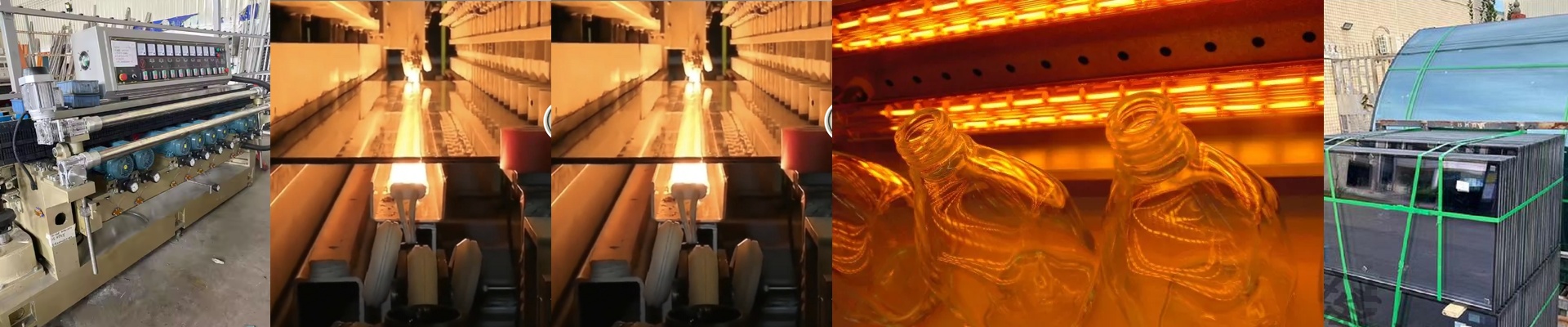
Most standard infrared lamps are kind of wasteful. They pump out a bunch of wavelengths that your glass additives just bounce right back. It’s a waste of power, and it’s frustrating. We do things differently. Instead of a one-size-fits-all approach, we tweak the emission spectrum to line up exactly with the “sweet spot” of your specific glass chemistry. How? We add a gold coating to the quartz envelope. This bounces the long-wave radiation back into the heating element, pushing the output toward the short-wave spectrum. The result is heat that hits harder and sinks deeper into the material.
Finding the “Sweet Spot”
Here’s the thing: glass isn’t just glass. Depending on what you’ve mixed into it, your material only wants to “grab” heat at very specific frequencies. If your lamp isn’t tuned to that exact peak, you’re basically just heating the air around the glass. It’s a slog. We handle the heavy lifting by adjusting the gold layer’s thickness and the filament mix. This shifts the energy so it hits the target frequency where your glass is actually receptive.It just works better.
The Gold Coating Trade-off
Think of that gold coating as a selective reflector. It shoves more energy forward. This means you can hit your target surface temperature faster, or use less power to get the same result. Your heat footprint stays tight and controlled. But a heads-up: that extra intensity puts a lot more stress on your cooling system. If you’re packing high wattage into a small space, make sure your fans can actually handle the heat. If they can’t, your lamps are going to burn out way sooner than they should.
From the Lab to Your Floor
We designed these to be simple drop-in replacements for your current IR arrays. Need a weird length? A specific connector? We’ll wire it to match your system’s voltage so you aren’t messing around with adapters. If you’re in the R&D phase, we’ll send over the spectral data sheets. That way, you can double-check the absorption match on paper before you ever install a lamp on the production line. No guessing, no “let’s see if this works”—just data.